
Healthcare systems worldwide face increasing pressure to improve efficiency, reduce infection rates, and enhance patient outcomes while managing staffing shortages and operational complexity. In response, robots are becoming integral components of modern healthcare delivery.
From advanced surgical systems to autonomous logistics platforms and patient engagement technologies such as Robin the Robot, robotics is reshaping how hospitals function.
Today, medical robots in hospitals support surgical precision, workflow optimization, infection prevention, and patient interaction. Understanding the different types of robots used in hospitals is essential for healthcare leaders evaluating innovation strategies.
What types of robots are used in hospitals?
Robots are specialized systems designed to operate safely within healthcare environments. Unlike industrial automation, these technologies function in complex, human-centered clinical settings.
Many of today’s solutions operate autonomously, meaning they can navigate facilities independently, execute programmed tasks, and integrate into existing workflows. Broadly, they fall into four primary categories:
- Surgical systems
- Hospital delivery robots
- Hospital disinfection robots
- Socially assistive robots
Each category addresses a distinct operational or clinical challenge.
Surgical robots in hospitals

What is robotic surgery?
Robotic surgery refers to computer-assisted surgical platforms that translate a surgeon’s hand movements into precise, controlled micro-movements. These systems enhance visualization and dexterity during complex procedures.
Importantly, this technology extends the capabilities of physicians rather than replacing them.
Benefits of robotic surgery
- Increased procedural precision
- Minimally invasive techniques
- Reduced blood loss
- Shorter recovery periods
The expansion of this technology across specialties such as cardiology, orthopedics, and urology highlights the growing role of advanced surgical robotics.
Socially assistive care robots: supporting patient experience
Beyond surgical and operational systems, a growing category of robots focuses on patient interaction.

What are socially assistive robots?
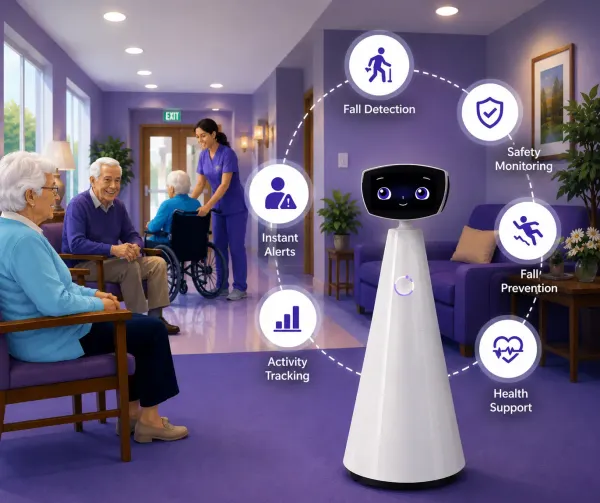
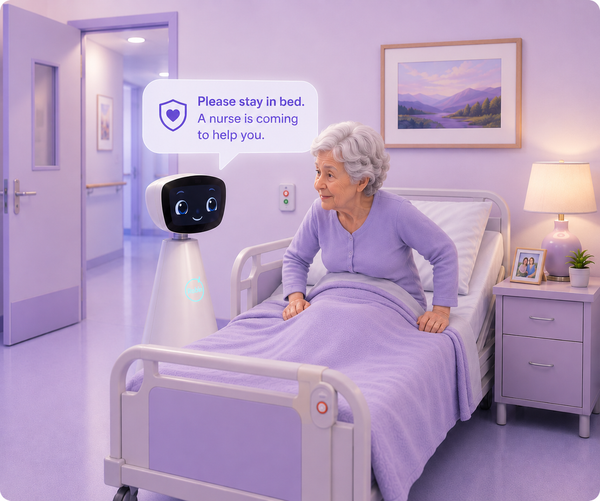
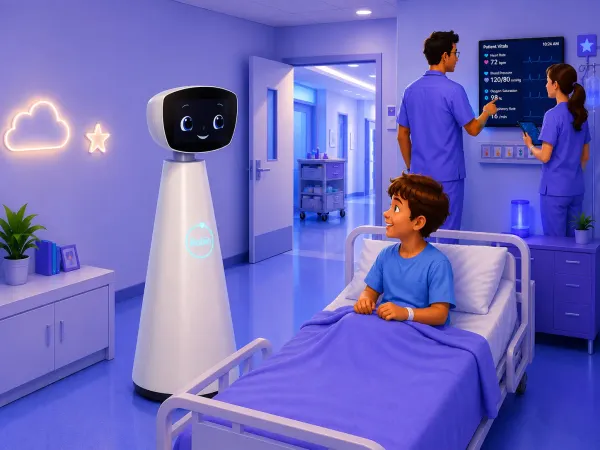
Socially assistive systems are interactive robotic platforms designed to engage patients through conversation, education, and guided activities. These represent robots helping through direct communication.
Unlike surgical or delivery systems, socially assistive robots are built to improve emotional comfort and cooperation.
In an article on UCLA Health, Kelli Carroll, director of the Chase Child Life Program, mentioned about Robin the Robot
"This is another tool in our toolbox to provide developmental and coping support for our young patients,"
Applications in healthcare settings
These systems can:
- Reduce anxiety before procedures
- Improve cooperation among pediatric patients
- Provide cognitive engagement for older adults
- Support communication between care teams and patients
As healthcare systems prioritize patient-centered care, socially assistive technologies are becoming a meaningful segment within medical robotics.
Real-world implementations
The measurable impact of socially assistive robotics can be observed in real healthcare settings.
At St. Mary’s Hospital for Children, implementation within pediatric care demonstrated how interactive engagement can enhance emotional comfort and support clinical workflows. The full breakdown is available in our case study: Socially Assistive Robotics in Pediatric Care | Robin at St. Mary’s Hospital for Children.
In a large academic medical center setting, implementation at UMass Memorial Health further demonstrated how patient-facing robotics can support care teams while improving engagement in high-traffic hospital environments. The UMass case study explores how interactive technology was integrated into daily hospital operations to enhance patient experience and streamline communication: How Patient Experience Technology Improves Pediatric Care | Robin at UMass Memorial Medical Center
Similar outcomes have been observed in dental practices, where anxiety reduction is critical to procedural success. In pediatric dental clinics, socially assistive robotics has helped improve cooperation, reduce stress in waiting areas, and enhance overall patient experience. You can explore this implementation here: Improving Pediatric Dental Patient Experience with Robotics
These real-world applications illustrate how patient-facing robotics complements clinical and operational systems by strengthening engagement, improving comfort, and supporting care teams across different healthcare settings.
Hospital delivery robots
Operational efficiency is another area where robots create measurable value.

What are hospital delivery robots?
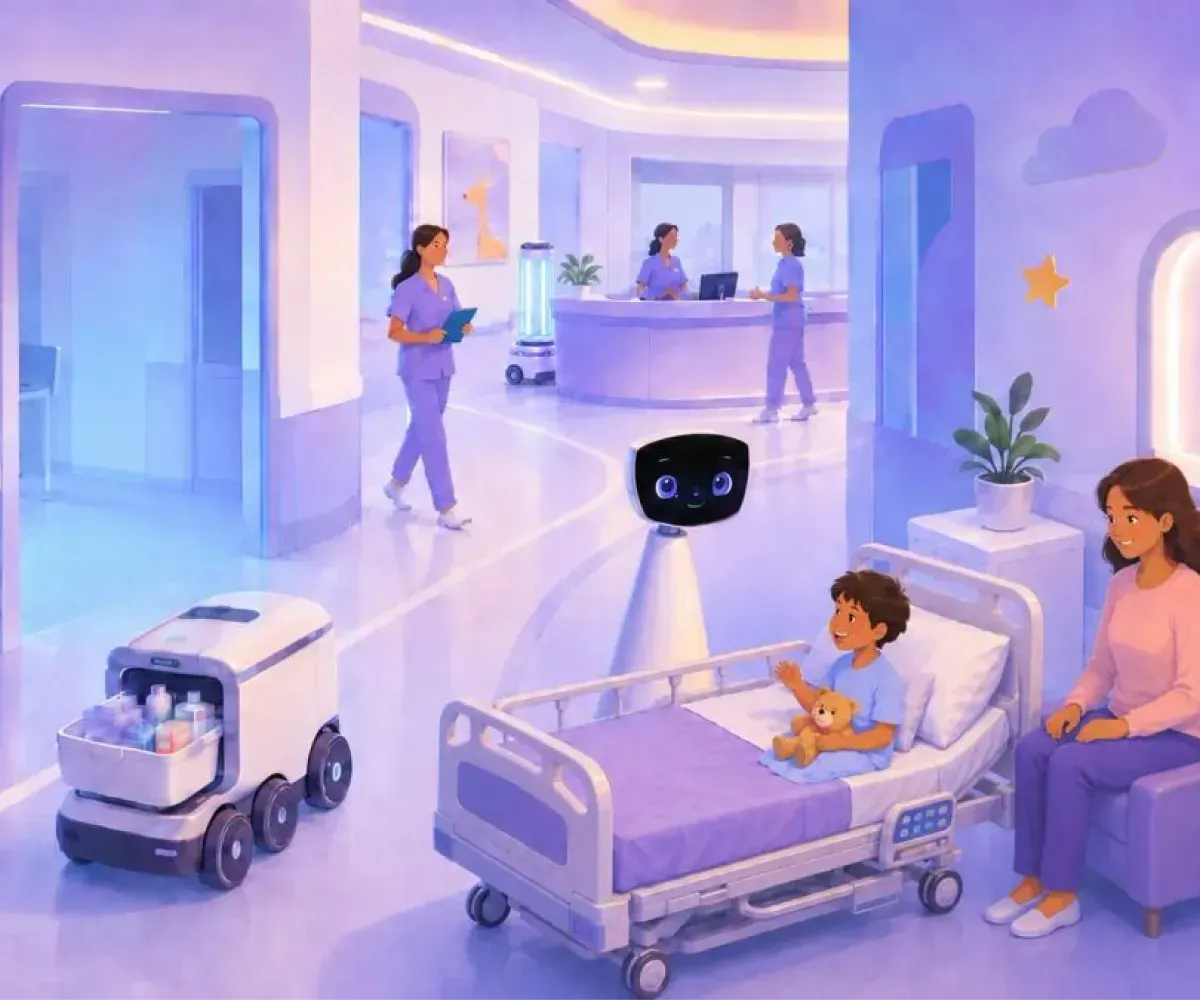
They are autonomous mobile platforms that transport:
- Medications
- Laboratory specimens
- Linens
- Medical supplies
These systems navigate corridors and elevators independently, optimizing internal supply chains.
Operational impact
By automating repetitive transport tasks, these robots:
- Reduce non-clinical workload for nursing staff
- Improve task consistency
- Operate continuously without fatigue
These systems represent established examples of robots that support operational infrastructure.
Hospital disinfection robots
Infection prevention remains a central concern for healthcare facilities.

What is a hospital disinfection robot?
This system typically uses UV-C light or automated sterilization technologies to reduce pathogens in patient rooms and surgical environments.
These systems are often described as a germ zapping robot, reflecting their ability to rapidly disinfect high-risk spaces.
Infection control applications
An infection control robot supports environmental services teams by:
- Enhancing cleaning protocols
- Reducing hospital-acquired infection risks
- Standardizing room disinfection procedures
While these technologies strengthen hygiene standards, they complement rather than replace manual sanitation practices.
Comparing the main types
The expanding role of robotics
As adoption increases, robotic systems are becoming integrated components of broader healthcare strategies.
From advanced systems for surgery to delivery, these technologies enhance multiple layers of hospital performance.
Conclusion
The ecosystem of robotics continues to evolve. These innovations transform healthcare by augmenting clinical performance, operational efficiency, and patient experience.