
1:1 sitters are often used when nursing home residents are considered at high risk of falling. The idea is simple: place someone near the resident so they can notice unsafe movement and call for help.
But that model has limits. Sitters are expensive, hard to scale, and not always a consistent fall prevention solution. In some cases, a sitter may be necessary. But for many residents, the real need is not constant human observation. It is timely reminders, reassurance, redirection, and support during the moments when fall risk begins to build.
That is why facilities looking for 1:1 sitter alternatives for fall prevention should not only ask how to lower staffing costs. They should ask whether there is a better way to support residents before risky movement turns into an incident.
Robin is designed for that gap.
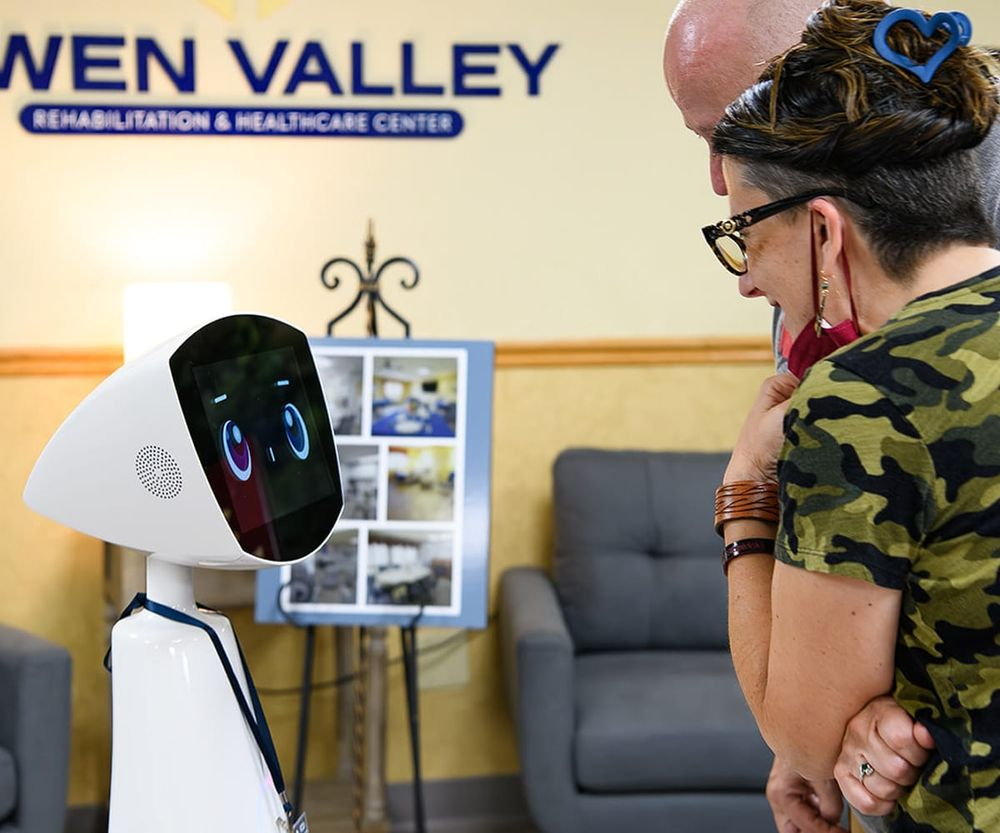
For broader planning around fall prevention in nursing homes, sitter coverage should be treated as one part of the larger safety strategy. This article focuses specifically on sitter-related costs, sitter limitations, and how Robin can help reduce unnecessary sitter dependence.
The real problem with fall prevention sitter costs
The biggest issue with sitters is that the model does not scale well.
A 1:1 sitter usually supports one resident at a time. If one resident needs observation, the cost may be manageable. If several residents need observation across day shifts, night shifts, weekends, and holidays, fall prevention sitter costs can increase quickly.
The one-on-one sitter cost is also difficult to control because sitter assignments often begin suddenly. A resident may become more confused after hospitalization, start a new medication, show increased weakness, or repeatedly try to stand without help. The facility responds by adding sitter coverage.
The problem is that sitter assignments are not always reduced as quickly as they are added. Once a sitter is in place, the coverage may continue because it feels safer, even when the resident may no longer need continuous 1:1 observation.
That is how patient sitter cost becomes more than a staffing expense. It becomes a sign that the facility may not have enough scalable support between standard rounding and full bedside supervision.
Why one-on-one sitters are not always the strongest answer
1:1 sitters can help in selected high-risk cases. But sitter coverage is not automatically the best fall prevention option.
The effectiveness of a sitter depends heavily on execution. Some sitters are experienced, trained, and closely connected to the care team. Others may have limited clinical training, unclear responsibilities, or communication barriers. In some facilities, sitters may not be trained specifically in dementia communication, redirection, fall-risk behavior, or escalation procedures.
That matters.
A sitter does not reduce fall risk simply by being present. The sitter must know what to watch for, how to respond, when to call staff, and how to communicate with a resident who may be confused, anxious, or irritated.
If those pieces are weak, a facility may be paying for continuous observation without receiving consistent prevention support.
This is why sitter use should connect to a clear nursing home falls protocol. The protocol should define when supervision is needed, when it should be reassessed, and when lower-intensity support may be enough.
The missing middle between alarms and sitters
Many facilities rely on two extremes.
At one end, there are passive tools: bed alarms, chair alarms, floor mats, pressure sensors, and video monitoring. These tools can detect movement or alert staff.
At the other end, there is one-on-one sitter coverage, which is expensive and difficult to scale.
The problem is the missing middle.
A bed alarm may tell staff that a resident is getting up. A floor mat may detect movement. A virtual sitter may observe the resident remotely. But none of these automatically solves what happens next.
The resident may still be alone. They may forget they need help. They may become impatient while waiting. They may not understand why they should stay seated. For residents with dementia, confusion, or memory-related conditions, this waiting period can be the highest-risk moment.
That is the key weakness of many patient sitter alternatives. They may detect or observe risk, but they do not always help manage the resident’s behavior before staff arrive.
Why passive monitoring is not enough
Passive monitoring can be useful, but it is reactive.
It usually tells staff that something is happening after the resident has already started moving. That can create several problems:
- Staff may not be able to respond immediately.
- Alerts may be false or low-priority.
- Too many alerts can contribute to alarm fatigue.
- Remote observers may not always escalate at the right moment.
- The resident may become more anxious or irritated while waiting.
This is especially relevant when facilities compare virtual sitter alternatives. Virtual sitters can monitor more residents than bedside sitters, but they still depend on remote judgment and fast on-site response.
Remote observation also may not be enough for residents who need repeated reminders or emotional reassurance. Watching a resident is different from helping that resident stay calm, wait, and remember not to stand alone.
That distinction is where Robin becomes more relevant.
How Robin works as a better alternative to routine sitter dependence
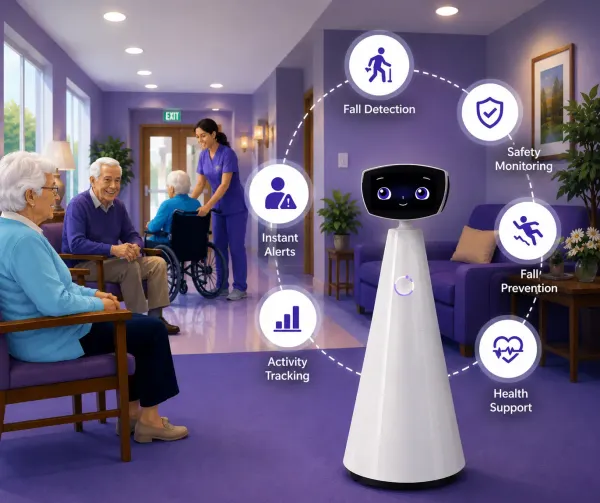
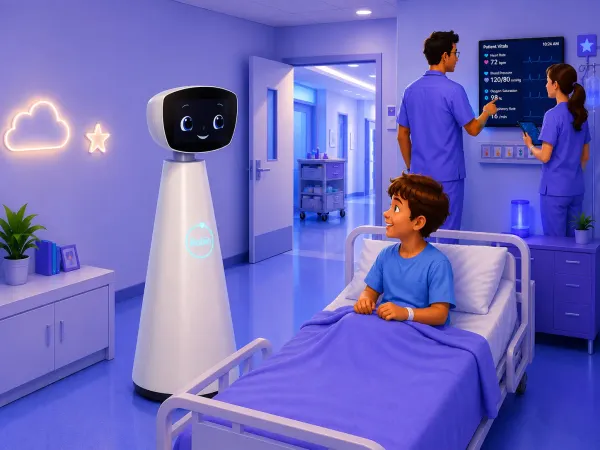
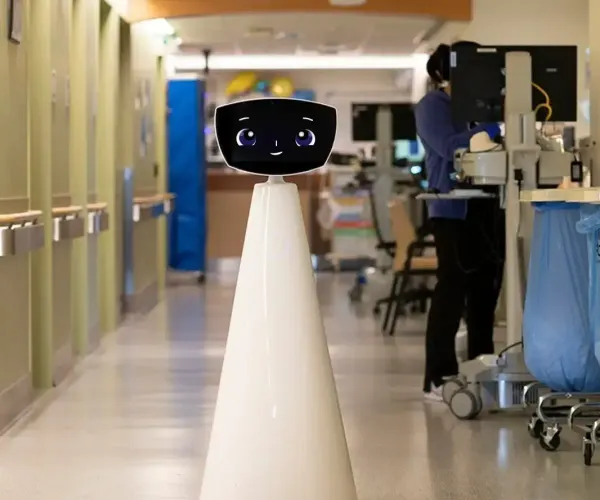
Robin is not just another monitoring tool. Robin can interact with residents.
That matters because many fall-risk situations are not caused only by mobility problems. They are often connected to memory, anxiety, loneliness, restlessness, or confusion.
A resident may know they should wait for help but forget a few minutes later. Another may become irritated because staff have not arrived yet. Another may try to stand because they feel alone or unsettled.
Robin can support these moments by:
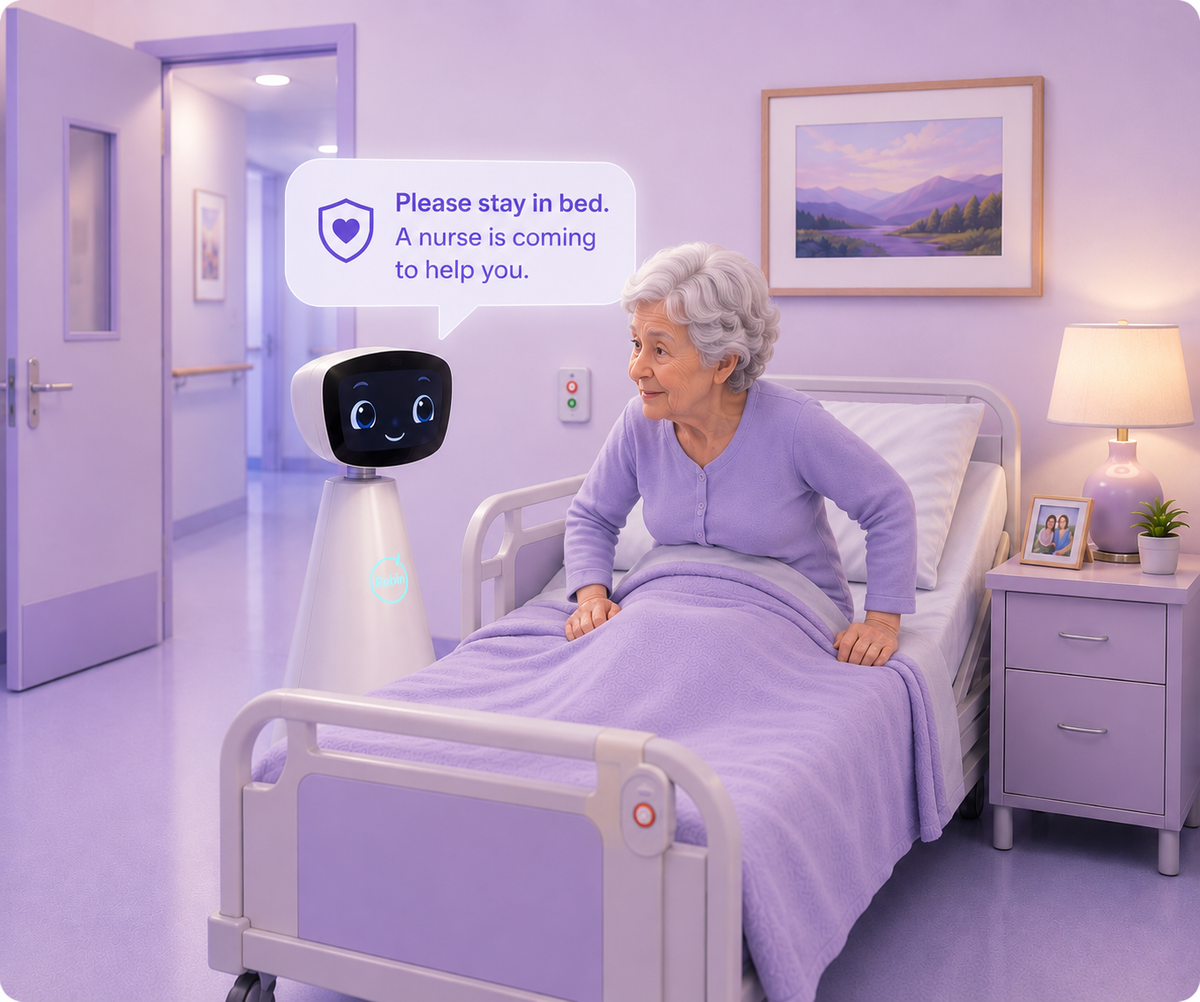
- reminding residents not to get up alone
- encouraging them to wait for staff
- offering reassurance while help is on the way
- keeping residents engaged during waiting periods
- supporting residents who need repeated verbal prompts
- providing a calmer alternative to passive alarms
A real-world fall prevention case study shows this use case in practice: Robin was used to stay near residents during rest periods, greet them when they woke, and remind them not to get up alone until a nurse arrived.
This makes Robin a stronger option for facilities that want to reduce patient sitter use without leaving residents unsupported.
Robin should not be described as replacing nurses, aides, or clinical judgment. But Robin can reduce dependence on routine 1:1 sitter coverage by supporting residents who need interaction, reminders, and reassurance more than continuous bedside observation.
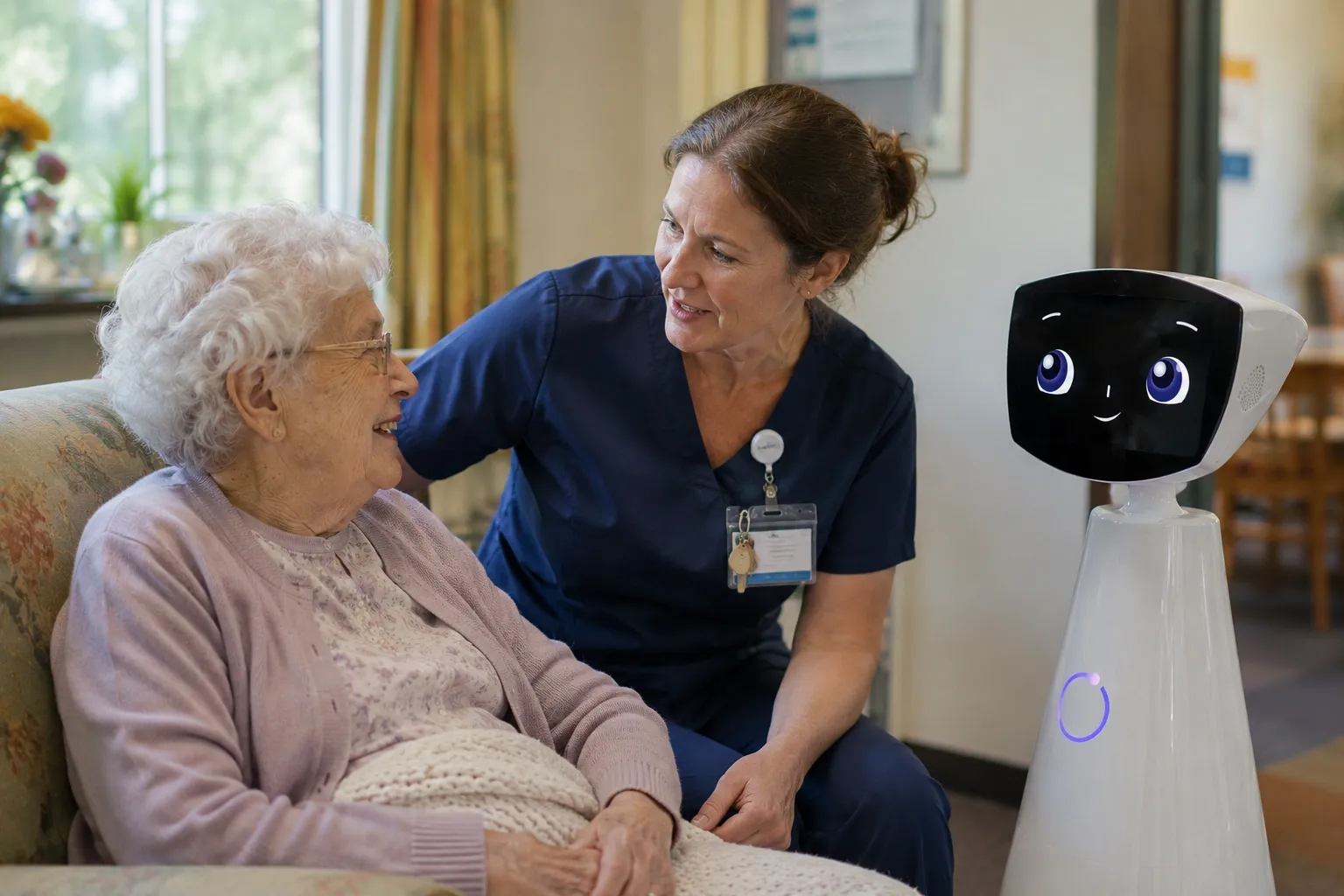
For organizations evaluating an elder care robot for care teams, the value is not simply automation. The value is a more scalable support layer between passive monitoring and direct staff response.
That is where fall prevention technology in nursing homes should move: not just detecting risk, but helping manage the moments before risk becomes urgent.
Where Robin can help reduce sitter hours
Facilities trying to reduce sitter hours need to be careful. Removing sitters without a replacement workflow can create safety risks.
The stronger approach is to identify residents who do not require constant hands-on supervision but still need more support than passive monitoring can provide.
Robin may be especially useful for residents who:
- repeatedly try to stand but can respond to reminders
- forget that they should call for help
- become anxious while waiting for staff
- need reassurance or companionship
- are at risk because of dementia or memory-related challenges
- benefit from redirection before behavior escalates
- do not need a person beside them at all times
This is the practical middle ground.
Some residents will still need direct supervision. But many facilities use sitters because they lack another option between an alarm and a person sitting at the bedside. Robin gives care teams another layer of support.
A more scalable way to reduce patient sitter cost
To reduce sitter costs safely, facilities should not start by asking, “Which sitters can we remove?”
They should ask:
- Which residents need physical supervision?
- Which residents mainly need reminders and reassurance?
- Which residents respond well to verbal redirection?
- Which sitter assignments continue because there is no better middle option?
- Where could Robin support residents while staff remain responsible for care decisions?
This keeps cost reduction tied to resident needs instead of simple staffing cuts.
Robin can help reduce unnecessary sitter dependence when it is used as part of a clear workflow: staff identify the resident’s support needs, Robin provides interaction and reminders, and nurses or aides remain responsible for escalation and hands-on care.
That is a more defensible way to lower sitter reliance.
Conclusion
1:1 sitters may still be needed in special cases. But they are not automatically the strongest or most scalable fall prevention option.
They are expensive. Their effectiveness varies. They depend on training, communication, role clarity, and timely escalation. For many residents, especially those with dementia, confusion, or memory-related challenges, the better solution may not be constant observation. It may be consistent reminders, reassurance, and engagement before risk escalates.
The strongest alternatives to patient sitters are not simply affordable ways to watch residents. They are tools that help close the gap between detection and action.
That is Robin’s advantage.
Robin can speak to residents, remind them not to get up alone, provide company while staff are on the way, and support safer waiting periods. For facilities looking to reduce fall prevention sitter costs, Robin offers a more scalable and cost-efficient alternative to routine sitter dependence without positioning technology as a replacement for staff.
Fall prevention should not depend on placing a person beside every high-risk resident. It should depend on a smarter support model that combines staff judgment with proactive technology designed to help residents before a fall-risk moment becomes an emergency.