
What Do Robots Do in Hospitals Today?
Hospitals are complex environments where efficiency, precision, and patient experience must work together. As a result, many healthcare providers are adopting robotic systems to support both clinical and operational workflows.
But beyond automation, many people still ask: what do robots do in hospitals on a daily basis?
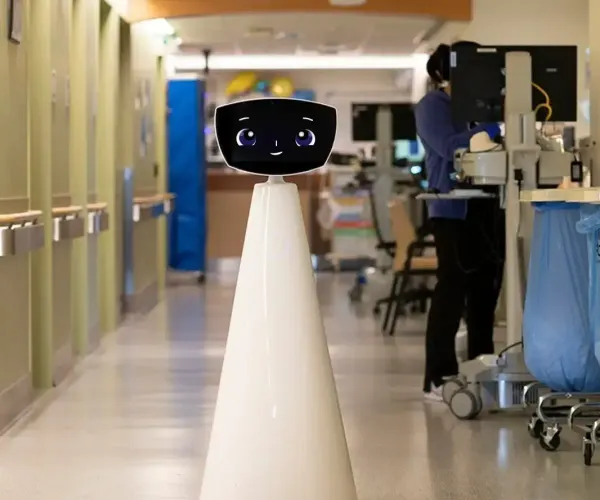
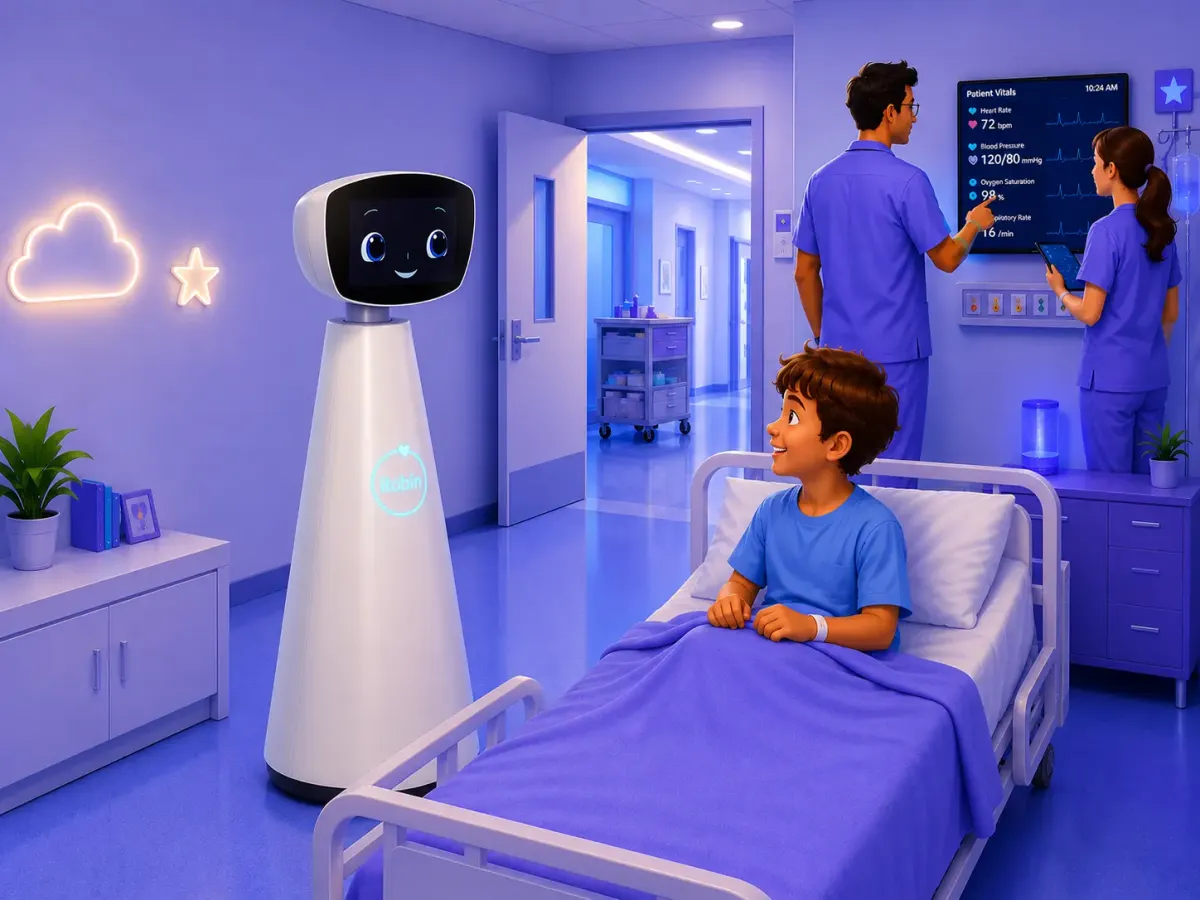
From assisting staff to interacting directly with patients, these technologies are becoming part of everyday care delivery. Solutions like Robin the Robot also show how patient-facing systems can reduce anxiety, improve communication, and create a more human-centered hospital experience.
For a broader overview of the industry, explore: Hospital Robots Explained: How Robots Are Transforming Modern Hospitals
A Day in a Hospital: How Robots Are Used in Practice
Understanding how robots are used in hospitals becomes clearer when looking at how they support real workflows throughout the day.
Supporting Morning Preparation and Room Readiness
At the start of the day, hospitals must prepare rooms, equipment, and care environments efficiently. This is one of the first areas where robotic systems can help support consistency, readiness, and smoother transitions between patients.
By assisting with repeatable preparation tasks, these technologies can also help reduce delays during busy morning periods.
Assisting During Ongoing Operations
Throughout the day, many robots used by doctors and hospitals help maintain smoother workflows by supporting routine operational processes.
This allows healthcare professionals to focus more attention on clinical priorities rather than spending time on repetitive coordination tasks.
Keeping Internal Processes Moving Efficiently
Healthcare environments depend on the constant movement of materials, supplies, and information. Many robots helping in hospitals contribute to maintaining this flow across departments, helping reduce interruptions and improve timing throughout the facility.
Where Robots Make the Biggest Difference for Patients
While efficiency is important, some of the most meaningful progress is happening in patient-facing environments, where robotic systems can directly influence comfort, communication, and overall experience.
First Contact: Reducing Anxiety Before Care
Hospitals can be overwhelming, especially for children and first-time patients. One of the most valuable ways robots that help in hospitals are being used is to create a more welcoming and less intimidating first impression.
As highlighted by the American Health Association’s article
“Robin - an interactive, human-assisted robot - is an innovative tool that’s helping make hospital visits less stressful for pediatric patient”
Instead of facing an unfamiliar environment alone, patients can interact with systems designed to guide, engage, and reassure them from the beginning of their visit.
During Waiting and Transitions
Waiting periods are often when anxiety increases the most. This is where robots working in hospitals can play a different role—not just supporting operations, but improving the patient experience itself.
By providing engagement during these moments, hospitals can help reduce stress and improve cooperation during later stages of care.
Supporting Communication Between Staff and Patients
Clear communication is critical, yet often limited by time constraints. This is another area where robots used in hospitals can help bridge the gap.
They may support patient understanding, reinforce instructions, and create a more structured interaction process, contributing to smoother care delivery overall.
For real-world examples of this in action, see: Socially Assistive Robotics in Pediatric Care | Robin at St. Mary’s Hospital for Children
How Robots Help Hospital Staff Without Replacing Them
A common concern is whether automation reduces the role of healthcare professionals. In practice, the answer is no. Most robots helping in hospitals are designed to support staff, not replace them.
Reducing Interruptions and Task Overload
Healthcare teams often manage multiple responsibilities at the same time. Routine requests, repeated handoffs, and operational distractions can reduce focus during busy shifts.
By taking over selected support tasks, robotic systems help reduce interruptions and allow staff to stay focused on higher-priority responsibilities.
Supporting More Consistent Workflows
Consistency can be difficult to maintain in fast-paced care environments. Many robots used by doctors and hospitals help stabilize repeatable workflows, making day-to-day operations more predictable and manageable.
This can reduce friction across departments while improving coordination.
Allowing More Focus on Patient Interaction
Perhaps most importantly, when healthcare professionals spend less time on repetitive operational tasks, they can dedicate more attention to direct patient care.
This often leads to better communication, more meaningful interactions, and a stronger overall care experience.
If you’d like to explore the broader organizational impact, see: The Advantages of Robots in Hospitals: Driving Better Outcomes and Operational Efficiency.
Why Patient Interaction Is Becoming the Missing Layer
Most discussions about robots used in hospitals focus on efficiency, logistics, procedures, or environmental support.
However, one area has historically received less attention: patient experience.
Hospitals are highly technical environments, but patients respond to reassurance, communication, familiarity, and emotional comfort. This is where a newer category of robots that help in hospitals is gaining importance - systems designed not only to perform tasks, but also to interact meaningfully with patients.
Rather than replacing human care, these technologies can extend it by helping patients feel more comfortable, informed, and engaged throughout their hospital journey.
What This Looks Like in Real Hospital Environments
In practice, how robots are used in hospitals depends on the type of facility, patient population, and operational priorities. However, three common patterns appear across many healthcare settings:
- Operational support helps improve efficiency and reduce delays.
- Workflow support helps relieve pressure on healthcare staff.
- Patient interaction helps improve cooperation, comfort, and overall experience.
Hospitals that combine these three layers often see the strongest overall impact.
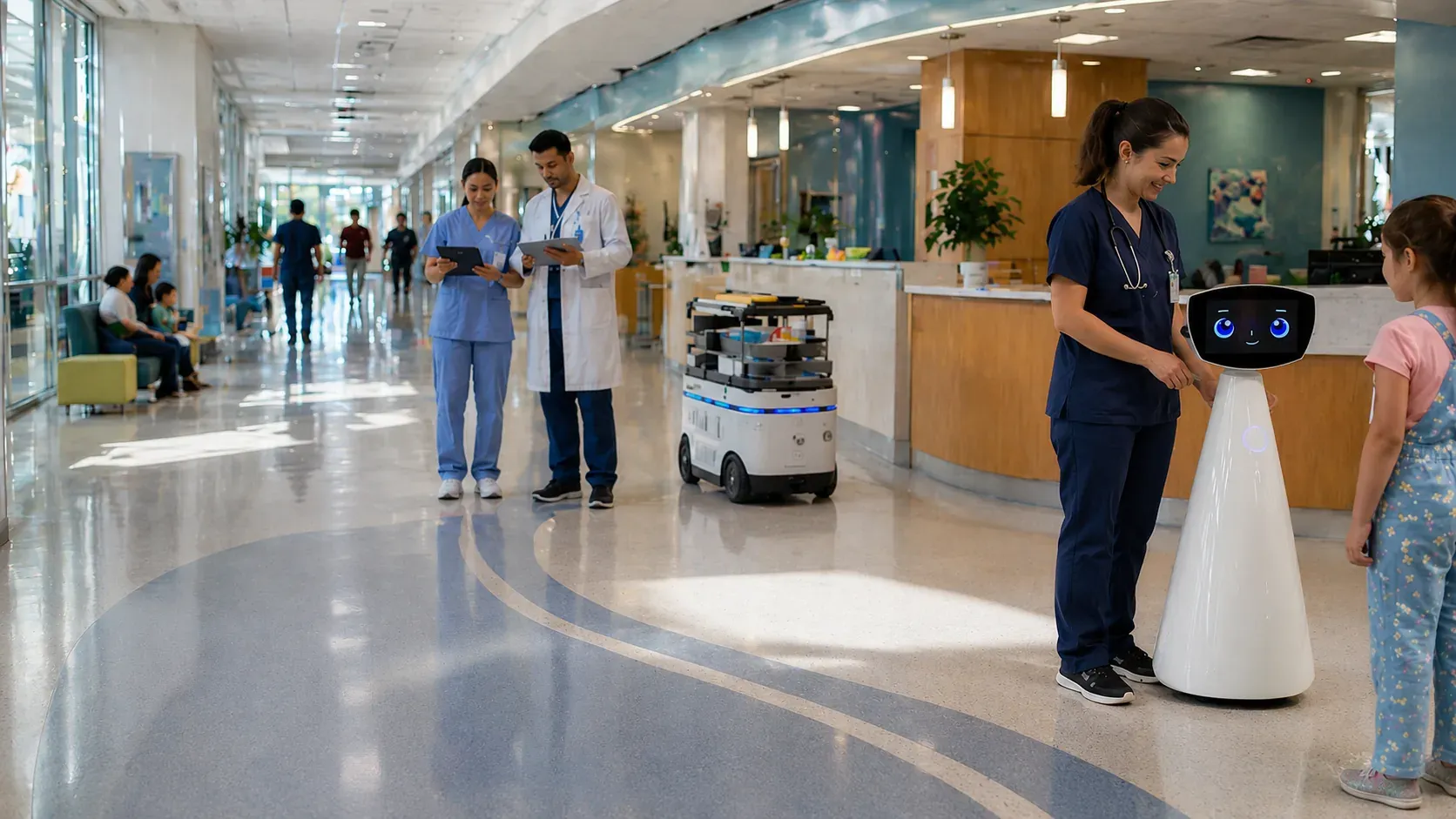
For example, in pediatric care environments, interactive systems have been used to reduce anxiety, improve engagement, and support communication between patients and care teams. You can explore this further on our [Children’s Hospital Robot Landing Page].
Conclusion: How Robots Are Changing the Hospital Experience
So, what do robots do in hospitals today?
They support workflows, assist healthcare staff, and increasingly help improve how patients experience care.
The role of robots working in hospitals is evolving - from purely operational tools to systems that contribute to both efficiency and more human-centered healthcare environments.
As hospitals continue to modernize, these technologies are likely to play an even broader role across clinical operations, staff support, and patient engagement.
To explore how intelligent systems are shaping this next stage of innovation, visit: AI and Autonomous Robots in Hospitals: What’s Possible Today.