Most conversations about robotics in pediatric healthcare revolve around efficiency, automation, or innovation metrics. Inside specialty pediatric recovery environments, the priority is different.
It is stability.
Hospitals exploring structured emotional support solutions, including a therapeutic robot, are asking how to reinforce regulation during prolonged medical recovery. Pediatric institutions evaluating Robin the Robot for pediatric hospitals are not pursuing novelty. They are addressing emotional strain that accumulates across repeated interventions.
At HealthBridge Children’s Hospital, that strain is part of daily care.
This hospital serves children recovering from complex medical conditions, including acquired and traumatic brain injuries. Many patients remain for extended periods. Monitoring repeats. Procedures repeat. Stress responses repeat.
In that context, pediatric mental health in hospitals directly shapes the course of care.
When Recovery Requires More Than Medical Treatment
Neurological recovery in children demands persistence. It also exposes vulnerability.
Chief Clinical Officer Roberta Consolver describes the unavoidable tension.
“Nurses and doctors have to walk in sometimes and do the hard things like drawing blood or causing them a little pain.”
Those moments are necessary. What determines their emotional impact is how pediatric anxiety during medical procedures is managed.
Repeated invasive interventions can intensify distress. Anticipatory fear increases. Physiological responses escalate. Elevated heart rate. Rapid breathing. Visible agitation.
Hospitals rely on structured non-pharmacological pediatric anxiety management strategies such as child life engagement, distraction, and breathing support. These approaches form the foundation of pediatric hospital mental health programs. In specialty neurological recovery environments, however, repetition requires reinforcement.
That reinforcement must be consistent.
A Stabilizing Presence During Invasive Procedures

At this hospital, Robin became part of the daily routines. She provided structured emotional support, not just entertainment.
Consolver explains:
“She is the one who walks in every day and makes them feel better.”
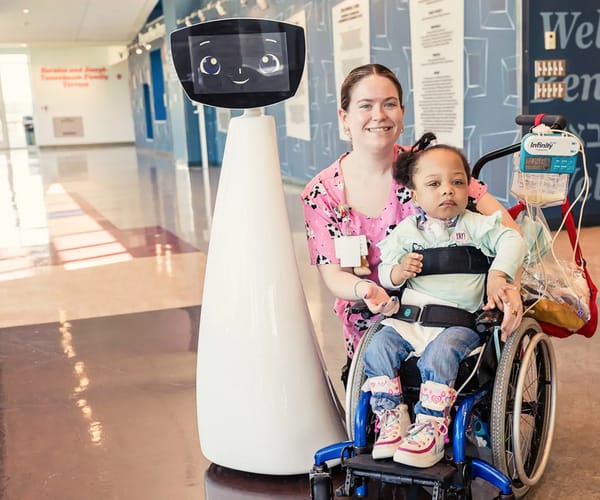
Robin serves as a stabilizing presence during invasive procedures. Using artificial intelligence, the robot interacts with children before and after clinical interventions. The interaction is predictable. The tone is steady. The presence is consistent.
Consolver describes the observed shift:
“When she leaves the room, their heart rates are under control, their breathing has slowed down, they have become very calm again.”
These are observable indicators of regulation. They demonstrate how robots in pediatric healthcare can enhance calming techniques for pediatric patients during high-acuity moments.
Reducing pediatric anxiety during medical procedures does not remove the necessity of care. It reduces escalation and improves how the experience unfolds.
Emotional Stability Within Complex Neurological Recovery

Children recovering from traumatic brain injuries often face long hospital stays and structured therapy schedules. Emotional resilience fluctuates. Isolation can intensify distress.
Effective pediatric mental health in hospitals in this context requires reinforcement beyond intermittent distraction. Structured mental health support for hospitalized children becomes part of sustaining cooperation and engagement across repeated care cycles.
Peter Attalla notes:
“There is so much medical care in the world, but how much of that care is really focused on mental health, especially for children.”
Within specialty pediatric environments, that focus becomes strategic.
Robin has been described as an “integral coworker.” That description reflects integration into care delivery rather than peripheral presence. The tool aligns with clinicians and reinforces existing non-pharmacological anxiety management pediatric frameworks.
For a deeper understanding of structured robotics models in pediatric settings, see Socially Assistive Robotics in Pediatric Care | Robin at St. Mary’s Hospital for Children.
For broader context on technology improving pediatric environments, review How Patient Experience Technology Improves Pediatric Care | Robin at UMass Memorial Medical Center.
At HealthBridge, the emphasis remains focused on complex neurological recovery.
If your facility manages prolonged pediatric recovery and is seeking to strengthen mental health support for hospitalized children, schedule a call to discuss how Robin can be integrated into your pediatric hospital mental health programs.
Talk with our team about how a therapeutic robot can support emotional regulation during repeated medical interventions.
Supporting Decision Makers in Specialty Pediatric Care
Clinical directors and administrators need to look at what actually happens over time.
How does pediatric anxiety during medical procedures change when a child is exposed to the same stress repeatedly during an extended stay?
Are current non-pharmacological anxiety management approaches still effective after the tenth procedure, not just the first?
Is emotional support structured and consistent, or is it dependent on who is on shift?
In specialty neurological recovery settings, emotional dysregulation affects the entire unit. It increases staff workload, slows procedures, and makes care less predictable. Strengthening structured support improves stability without changing medical protocols.
The Expanding Role of Robots in Pediatric Healthcare

When Consolver reflects on Robin’s presence, she states:
“They can never take my Robin away.”
In a specialty pediatric recovery unit, words like that are not casual. Long days, repeated procedures, and the quiet relief that follows when Robin helps a child settle shape them.
As robotics in pediatric healthcare continues to evolve, its impact in specialty pediatric recovery settings may be most visible in its ability to reinforce pediatric mental health in hospitals during repeated high stress interventions.
Stability during complex recovery is not decorative. It influences how confidently care proceeds.
Schedule a Call to Bring Robin to Your Hospital
If your pediatric facility is navigating complex recovery environments and seeking structured solutions to reduce pediatric anxiety during medical procedures, schedule a call with our team today.
Discover how Robin the Robot for pediatric hospitals can strengthen your existing pediatric hospital mental health programs and support non-pharmacological anxiety management within specialty care.